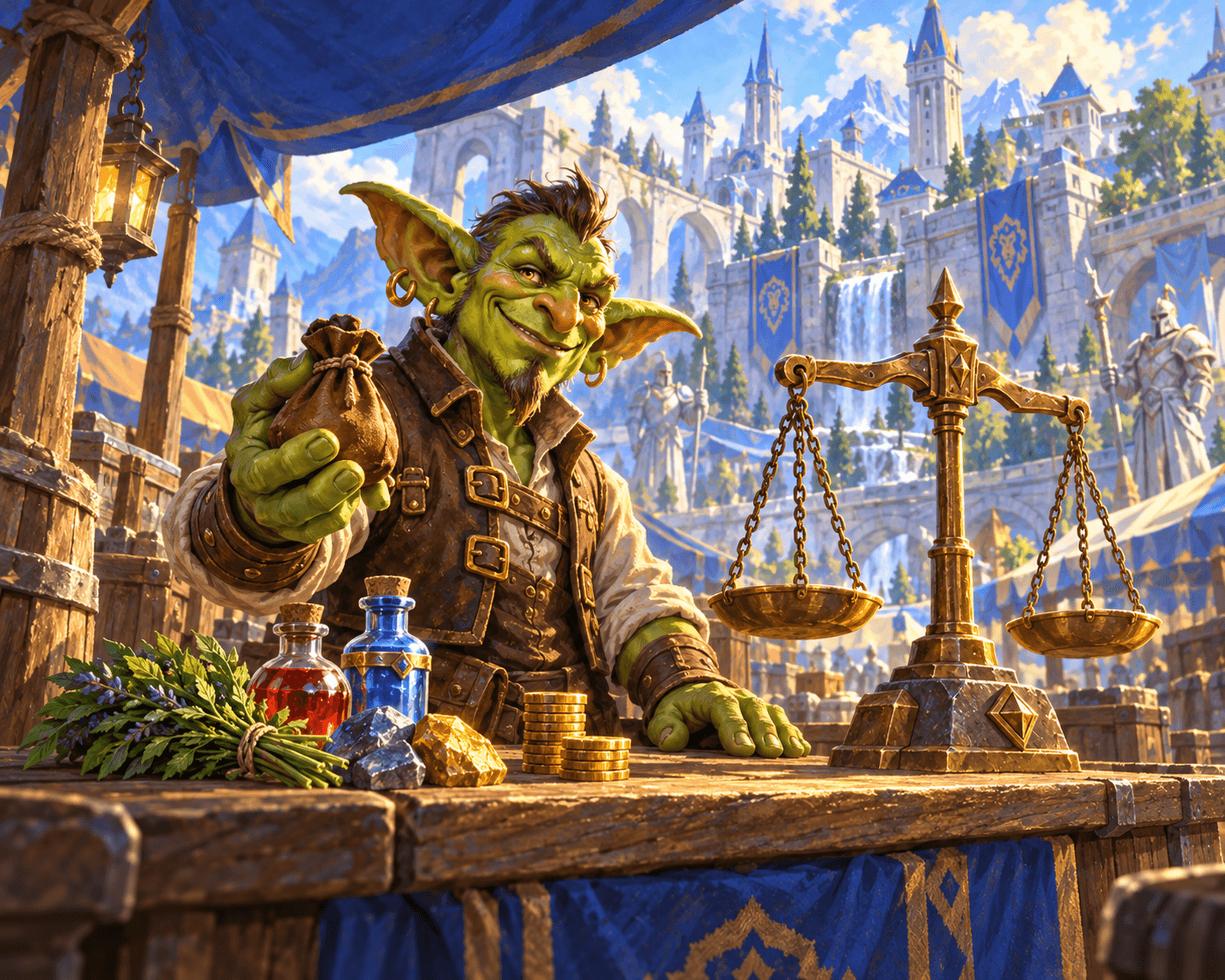
A fresh economy starts with players earning gold and trading what they find or craft. Quest rewards and vendor sales create income from the game; Auction House purchases move gold between players. Required payments to the game, such as riding training, serve a different role by removing currency.
For Forever, the key questions are which costs players will face, what they will want to buy, and which rules are confirmed. This guide explains those distinctions and separates likely market effects from established mechanics. For farm routes and method comparisons, see the gold-making guide. For a before-60 buy list, see spending priorities. Systems context lives in the Forever preview.
Where Does New Gold Come From in WoW Forever?
At launch, Forever is a fresh 1-60 economy. New gold enters player wallets mainly through:
- Quest rewards paid by NPCs.
- Vendor sales of trash, greys, and unwanted items.
- Other NPC payouts such as some profession or quest turn-ins that grant copper directly.
Everyone starts with empty bags relative to endgame goals. That scarcity is temporary, but it shapes the first weeks of prices.
How Does Trading Move Gold Between Players?
Once gold exists, trading moves it:
- Auction House listings for mats, crafts, bags, food, potions, and BoEs.
- Direct trades and tips.
- Crafting services if Blueprint knowledge or rare recipes stay scarce.
Forever is realmless by ruleset (Normal, PvP, Roleplaying; Hardcore later). Each ruleset is its own ecosystem. Factions stay separate. Blizzard's Deep Dive confirms separate ecosystems and no cross-ruleset grouping. Confirm in beta whether Auction Houses are fully separate before you copy prices across rulesets.
Which Purchases Remove Gold From the Economy?
Gold sinks are payments to the game that take currency out of player hands. Confirmed or strongly expected sinks include:
- Riding training (BC-style). Blizzard shifted mount cost into the skill purchase. Pack mounts from Skyborne upgrades still need that skill. Exact riding gold costs have not been published.
- Profession trainer ranks and many NPC recipe purchases.
- Repairs paid to NPC vendors.
- Class reagents, ammo, and similar NPC stock when bought from vendors.
For a practical before-60 buy order, use the spending priorities guide.
What Is Forever's Current Token Policy?
In retail WoW, a WoW Token lets a player buy a Token with real money and list it so other players can pay gold for game time (or related services). That moves existing player gold through an official exchange; it does not create new gold for the buyer. Blizzard explains the Token system in its WoW Token news post.
For Forever, Destin's BlizzCon interview coverage on Wowhead states there are no plans for a WoW Token or character boosts. Plan around player-driven supply under that policy.
Practical consequence: do not budget as if you can refill Forever gold through an official Token shop. Earn, trade, and save instead.
What Could Affect Demand After Launch?
Blizzard confirmed several systems that create buyers. Their market size depends on how many players use them and at what prices. The table below separates the feature from what remains open.
| System | Possible affected materials | Evidence | What to watch |
|---|---|---|---|
| 600+ new recipes | Ore, herbs, leather, cloth, reagents across skill bands | Deep Dive | Which mid-tier mats stay liquid after week one |
| Cooking food (stats + XP bonus) | Meat, fish, cook crafts | Deep Dive | Tooltip wording and cheap-food uptime |
| Camping profession objects | Mats for wheels, labs, racks, cook fires, banners | Deep Dive; skill ~20 first objects | Which camps see real traffic on quest roads |
| Blueprint advanced objects | Mats + scarce knowledge crafts | Dungeon boss Blueprints | Tradeability and drop rates |
| Legacy Bountiful Harvest | Higher gather yields (supply side) | Professions tree; 16-point spend cap | Whether gatherers outpace demand |
| Dec 9 raids | Raid consumables, enchants, food | Raid schedule coverage | Consumable prices as prog starts |
| Riding training | Player gold reserved, then spent to NPC | BC-style design confirmed | Exact trainer prices at unlock |
These features are confirmed. How large each market becomes is something live prices will show.

How Should You Think About Professions in This Economy?
Profession choice affects income and expenses. Primary professions (two slots) are the main decision. Cooking and Fishing are supplementary and can still support food demand without filling both primary slots.
A practical launch stance:
- Character one: favor gathering (Mining, Herbalism, Skinning) for low starting cost and liquid mats.
- Add crafting when a finished item clearly beats selling the ingredients after fees and time.
- Cooking / Fishing: useful support for the experience-bonus food loop; check Auction House prices before long fishing sessions.
- Alts: craft-focused alts make more sense after the main has bank gold and Legacy points.
How Should You Spend Legacy Points for Income Versus Alts?
| Legacy focus | Pick when… | Skip when… |
|---|---|---|
| Bountiful Harvest (Professions) | Main is a gatherer / farmer | You barely touch nodes |
| Well Rested (Adventure) | You will level many alts | You only ever play one character |
| Resourcefulness (e.g. Reagent Economy) | Buff classes burning reagents | Gather income already covers reagents |
Launch spend cap is 16 points per character. Earn up to 65 for cosmetics. Choose the character role first, then spend.
What Launch Plan Fits a Fresh Economy?
Use progression milestones instead of calendar-day targets:
- Before queue: lock professions (double gather or gather plus a craft you can fund).
- While leveling: quest with nodes on; vendor greys; bank BoEs; list mats in sane stacks.
- Around skill 20: unlock Camping objects if your crafts support the group.
- Approaching riding: protect the reserve; stop optional AH upgrades.
- After mount: rebuild a consumable runway toward 60.
- Near Dec 9: stock food and potions for raid unlock demand.
- Legacy spend: only after you know main versus alt identity.
What Changes for Raiders Without a Token?
Raid consumable culture still exists. Without a Token exchange:
- Guilds cannot assume every member can buy gold through an official Token shop before prog.
- Alchemy and Cooking mains become social infrastructure.
- Gathering alts and Blueprint crafters gain status.
- Wipes cost repairs and consumes you must farm or buy from players.
What Should You Verify in Beta for Economy Planning?
Use the beta guide for access, then check:
- Herb / ore / leather density on your 1-30 roads.
- Cooking food tooltips (experience bonus wording and scaling).
- Camping object skill requirements and buff value.
- Whether early Blueprint-capable dungeons exist under the cap.
- Legacy UI costs for Bountiful Harvest versus Well Rested.
- Auction House behavior on your intended ruleset.
- Trainer fees versus mat prices for any craft you love.
Final Verdict: Understand the Market, Then Earn
WoW Forever's launch economy rewards players who know where gold comes from, how trading moves it, which NPC costs remove it, and which systems create demand. With no Token planned, plan around player supply. Take gathering seriously, margin-test crafts, spend Legacy on the role you actually play, and bank for riding. For the method details, continue in the gold-making guide.
Frequently Asked Questions
Will WoW Forever have a WoW Token?
Destin's interview with Blizzard, summarized on Wowhead, says there are no plans for a WoW Token or character boosts in WoW Forever. In retail, Tokens let players exchange a purchased Token for other players' gold. Build your Forever gold plan around earning and trading under that stated policy.
Where does new gold come from in WoW Forever?
New gold mainly enters through quest rewards, vendor sales, and other NPC payouts. Auction House trades move existing gold between players rather than creating new currency.
What is the difference between a gold sink and buying from players?
A sink pays an NPC and removes gold from the player economy, such as riding training. Buying a player-made bag or food transfers gold to another player.
How do 600+ recipes and Cooking food affect demand?
Blizzard's Deep Dive describes recipes across professions and level ranges, plus food that grants stats and a small experience bonus. That creates buyers for mats and crafts while people level, not only at 60.
Does Legacy Bountiful Harvest help income?
Bountiful Harvest increases Mining, Herbalism, and Skinning yields. It competes with other Legacy spends such as Well Rested under the 16-point launch cap.
How should I plan gold without a Token?
Plan around gathering while leveling, careful Auction House sales, and a riding reserve. Do not rely on an official Token exchange to bail out bad spending. See the gold-making guide for methods.
Do realmless rulesets change the Auction House?
Each ruleset is its own ecosystem. Confirm in beta whether Auction Houses are fully separate, and always price against the ruleset you actually play.
What should I test in WoW Forever beta for economy planning?
Test node density, food tooltips, Camping unlocks, Legacy costs, trainer fees, and early AH liquidity. Carry the notes into November 4 launch week.
Looking for a WoW Forever account?
Submit a request and tell us what you need.