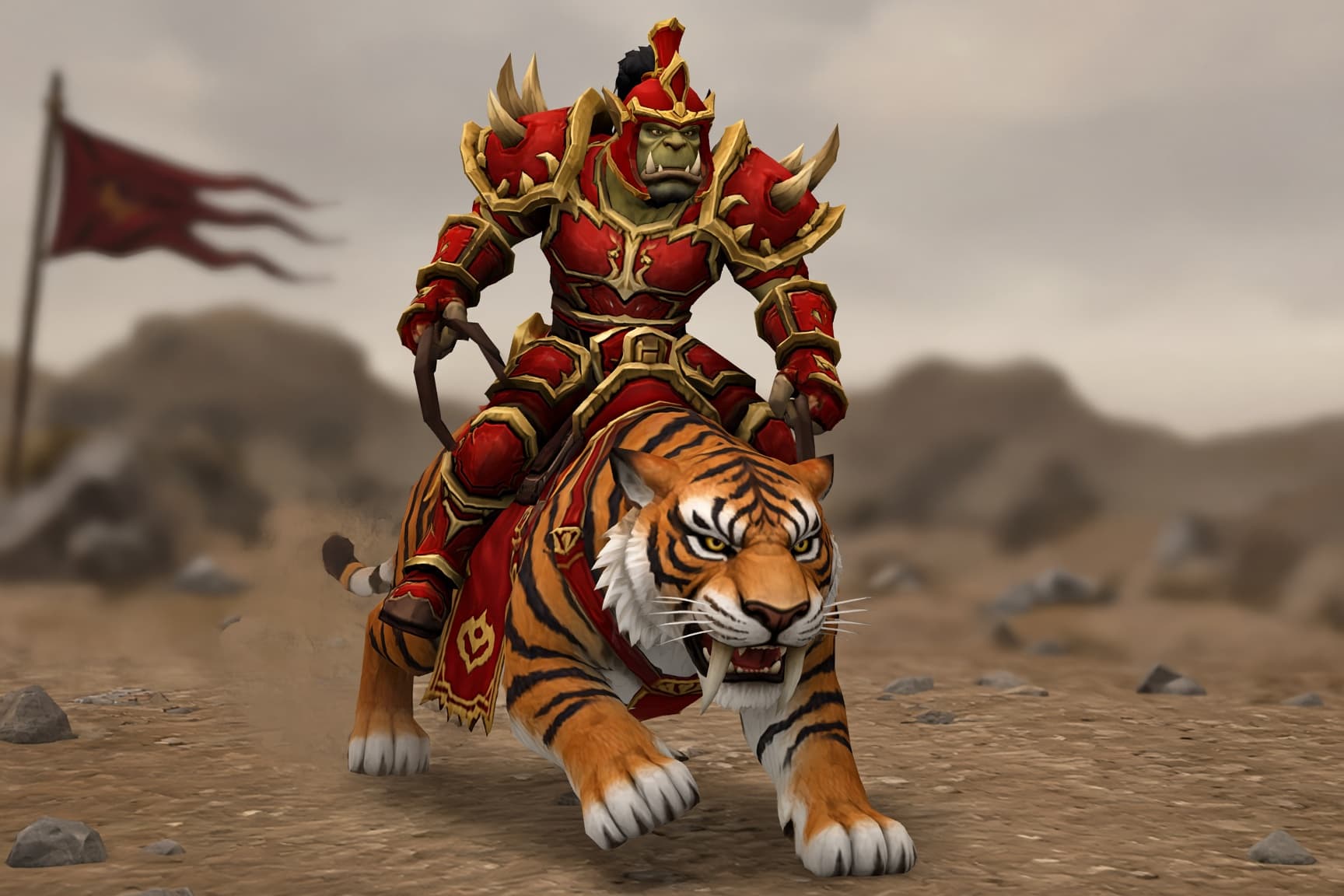
Do You Think Digital Games Are Better Than Real Toys?
It's the question every parent eventually asks themselves around a holiday or birthday, usually staring at a wishlist that's gone fully digital. The kid wants V-Bucks. They want a Roblox subscription. They want a year of WoW game time. The LEGO sets and action figures that used to dominate gift lists have been replaced by gift cards and download codes.
So which is actually better — the digital game your kid will obsess over for a year, or the physical toy that'll sit on a shelf gathering dust by March? The honest answer is that the question itself is wrong. They're not really competing in the same category anymore. But there's still a lot worth unpacking about how digital play has reshaped what "owning a toy" even means.
The Case for Digital
The most obvious argument for digital games is engagement. A modern game like *World of Warcraft* or *Fortnite* isn't a static object — it's a living world that updates every few weeks, adds new content, hosts events, and connects players to millions of others around the globe. A toy fire truck doesn't get a new expansion in 2027 with a new vehicle class and updated gameplay mechanics. A LEGO set doesn't have a Discord community where you compare builds with strangers in Brazil at 2 AM.
For a generation that grew up online, this kind of dynamic, social, evolving experience isn't just preferable — it's what "play" looks like by default. Kids aren't choosing digital over physical because adults are pushing screens on them. They're choosing it because their friends are there, the experiences are richer in scope, and the worlds feel infinite.
There's also a quiet economic argument hiding inside digital games. A $60 game played for 200 hours costs 30 cents an hour of entertainment. The Nerf gun your kid asks for might cost $40, get used hard for two weeks, and then live behind the couch forever. Per dollar of actual engaged time, digital games often win by an order of magnitude.
And then there's the social layer. *Roblox* and *Minecraft* aren't really games — they're hangout spaces. They're where today's tweens build, chat, role-play, run pretend businesses, and collaborate on projects with friends across town and across continents. Strip away the screens for a second and what you're describing sounds a lot like the imaginative play that childhood development experts have praised for decades. The medium changed. The behavior didn't.
The Case for Physical
Before we declare digital the winner, let's be honest about what's lost when play moves entirely behind a screen.
Physical toys exist in space. A child can stack blocks, knock them over, feel the weight of a die-cast car in their hand, smell the plastic of a new action figure. There's something about manipulating real objects that's genuinely different from clicking on virtual ones, and decades of developmental research suggest that tactile play matters — especially for young kids whose brains are still wiring up their sense of how the physical world works.
Toys also don't require batteries, internet connections, or a parent's password. A six-year-old with a wooden train set can play independently for hours. A six-year-old with an iPad needs Wi-Fi, a charged device, an account, parental controls configured correctly, and the maturity to not blow $400 on Robux while you're making dinner. Physical toys come with friction; digital ones come with a different set of friction that just happens to involve different problems.
And there's a permanence to physical objects that digital experiences struggle to match. The LEGO set you built when you were eight might still be in a box in your parents' garage. The MMO your kid plays today might shut down its servers in 2031, and every screenshot, every legendary item, every memory becomes inaccessible. Game studios go out of business. Live-service games die. Digital ownership has an expiration date that physical ownership simply doesn't.
This is one place the older "digital is just renting" critique still has teeth. Buy a bookshelf full of board games and your grandkids can play them. Buy 200 games on a digital storefront and there's a real chance most of them will be unplayable in 30 years.
Where the Lines Blur
The interesting part isn't picking a side — it's noticing how thoroughly the categories have collapsed into each other.
A *Pokémon* card collection is physical, but its value is driven by digital marketplaces and online community grading services. A LEGO set comes with companion apps that scan pieces, animate builds, and unlock digital content. *Beyblade* sells physical tops with QR codes that pair to a mobile game. *Skylanders* and *amiibo* literally turned figurines into save data carriers. The boundary between "real toy" and "digital game" has been blurry for over a decade and the trend is only accelerating.
Meanwhile, the highest-end gaming experiences are arguably more physical than ever. A custom mechanical keyboard with hand-lubed switches and PBT keycaps is unmistakably a tactile object — assembled, modified, and modded with the same hands-on care that hobbyists once spent on model trains. A racing sim rig with force feedback wheel, hydraulic pedals, and a triple-monitor curved display is a more elaborate physical setup than most toy collections. Sim racing, flight sim, and VR are all categories where the "digital" experience absolutely depends on serious physical hardware.
Even within a single game, digital and physical experiences interlink. WoW players collect physical art books, statues, and trading card sets that reference their characters. Fortnite players buy plush versions of their favorite skins. The collectors' market for video game memorabilia rivals the market for the games themselves.
What "Owning" Means in 2026
This is where the conversation gets philosophically interesting. When you "buy" a digital game, what do you actually own?
Legally, you own a license. The publisher can revoke it. Your platform can lose access to it. Servers can shut down. You can't resell it like a used board game. You can't lend it to a friend the way you'd lend a physical book.
But that's only one definition of ownership. Ask anyone who's spent ten years building out a *World of Warcraft* main: the account isn't really an account — it's a place where they keep memories. Every transmog set tells a story about where they were and who they raided with when they earned it. Every rare mount represents a campaign of patience or skill. The "ownership" feels real in the way that matters most to humans, even when it's legally fragile.
This is one of the reasons there's a thriving secondary market for established gaming accounts. Players who've invested years into building something don't think of it as "just data" — they think of it as a real asset, comparable to selling a curated collection of physical items. Marketplaces exist because that emotional and time investment is genuinely valuable, even if the underlying object is a string of database entries on Blizzard's servers.
The same psychological reality applies to OSRS pures, Fortnite OG accounts, FFXIV characters with rare mounts. The community has decided these things matter — and once a community decides something has value, that value is real, regardless of what the publisher's terms of service say.
So Which Is Better?
Honestly? Neither. Or both. Or it depends entirely on the kid, the moment, and what kind of play they're after.
Physical toys teach skills digital games can't easily replicate: motor control, spatial reasoning, the satisfaction of building something with your hands. Digital games teach skills physical toys can't replicate: collaboration with strangers across the world, navigating complex digital systems, problem-solving in environments that respond and adapt.
The kid who only ever plays digital games is probably missing out on something. So is the kid whose parents try to keep them in a 1990s toy aisle. The interesting parents we know don't pick a side — they let their kids do both, set reasonable boundaries, and notice when one form of play is starting to crowd out the other.
For adults, the question is even more open-ended. A lot of grown-up "play" — TCG collecting, sim racing, MMO progression, board game group nights — happily sits at the intersection of physical and digital. We're long past the era when those categories were rivals. They're collaborators now.
The Bottom Line
If you're shopping for a kid this year and you're stressed about whether to get them a real toy or a digital game, here's the honest take: get them whatever they're going to actually engage with. The format matters way less than the engagement. A LEGO set that gets built once and abandoned isn't more "wholesome" than a video game that builds friendships across continents. And a video game that becomes a screen-time zombie loop isn't better than a physical toy that gets played with creatively for years.
Pay attention to what your kid is actually doing with the thing — not what category it falls into. That's the real question.
And if you're an adult shopping for yourself? You already know the answer. It's whatever pulls you in. The line between "real" and "digital" play has been gone for a while. The only thing that matters is whether you're having fun.
Browse WoW accounts on AccountShark — verified listings with detailed breakdowns of characters, mounts, transmog, and progression.