The Hidden Value of Gaming Collections
There's a conversation happening in gaming that most people don't think about: the question of digital ownership and value. When someone spends 15 years collecting mounts in World of Warcraft, amassing 500+ unique rides including several that can never be obtained again — what is that collection actually worth?
The answer, increasingly, is: a lot.
Digital Items Have Real Value
This isn't theoretical. Gaming accounts with rare collections trade hands for thousands of dollars. A WoW account with a Scarab Lord mount, full Gladiator drake collection, and extensive unobtainable transmog can sell for $5,000-$15,000 or more. An OSRS account with a maxed total level and a bank full of 3rd Age items can fetch similar prices.
The secondary market for gaming accounts is a substantial industry spanning marketplaces, forums, and private sales across every major MMO and live-service game. AccountShark is one of many marketplaces that facilitate these transactions, but the market extends far beyond any single platform.
What creates this value? The same thing that creates value in any collectible market: scarcity, provenance, and emotional significance.
The Scarcity Principle
The most valuable digital gaming items share one characteristic: they can't be obtained anymore.
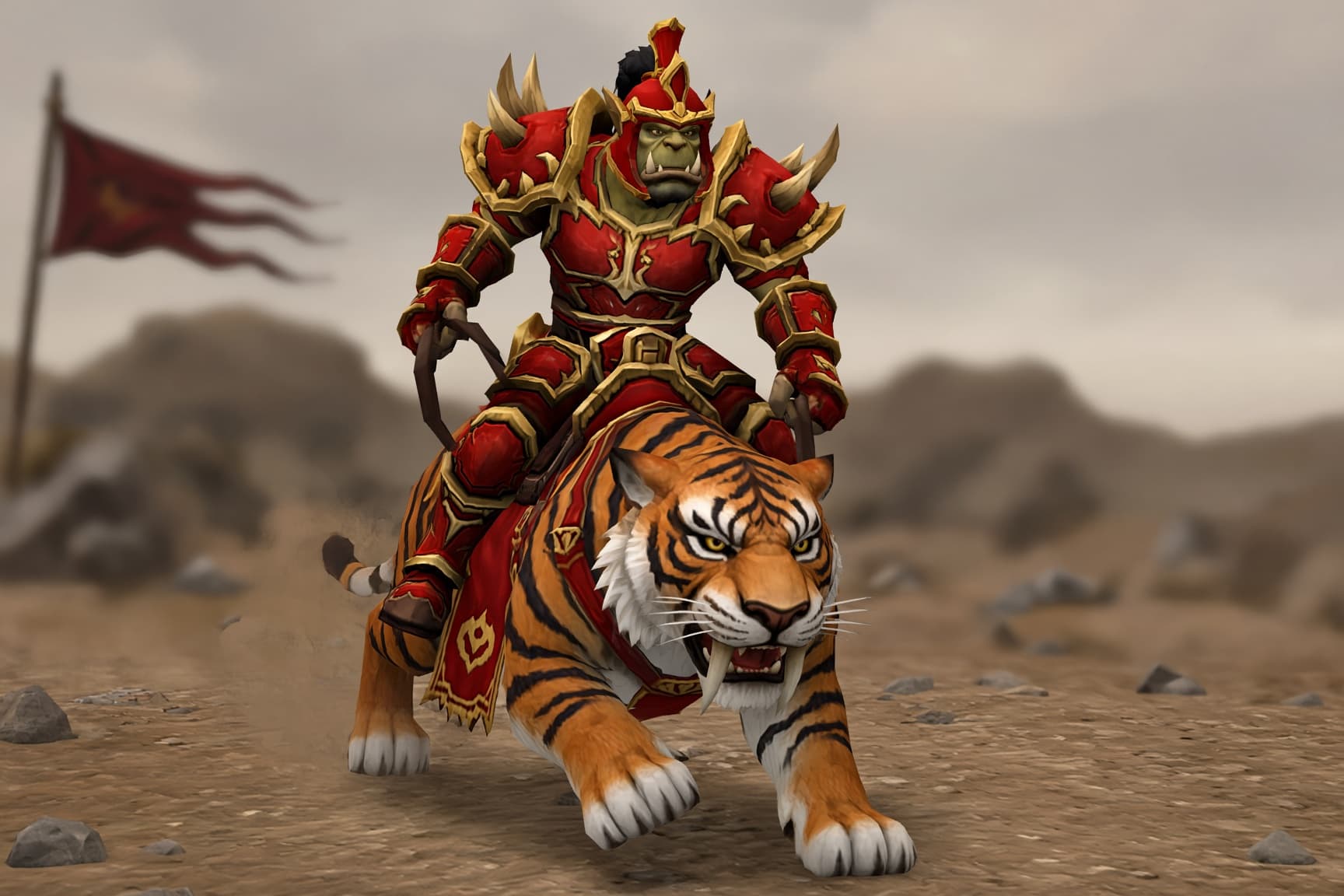
Unobtainable mounts in WoW — Amani War Bear, Plagued Proto-Drake, Gladiator mounts from past seasons — derive their value from permanent removal. No matter how much gold you have, no matter how skilled you are, you cannot earn these items in 2026. The only way to have them is to have been there when they were available, or to acquire an account that was.
This mirrors real-world collectibles perfectly. A first-edition Pokemon card is valuable not because the artwork is irreplaceable, but because the supply is fixed and demand exceeds it. A Black Qiraji Battle Tank mount operates on the same principle.
OSRS rare items follow a different scarcity model — items like the 3rd Age Pickaxe are still technically obtainable but so astronomically rare that the effective supply grows by maybe one or two per year. Party hats in RS3 are the ultimate example: originally free Christmas crackers from 2001, now worth billions of GP because the supply is fixed and the player base has grown.
The Time Dimension
Digital gaming collections have a unique value driver that physical collectibles don't: time that cannot be bought back.
A maxed OSRS account represents 2,000+ hours of gameplay. That's not something you can shortcut — even if you buy the account, someone invested that time. A WoW account with Cutting Edge achievements from every raid tier since Mists of Pandaria represents a decade of consistent high-level play.
This time investment creates a form of value that's distinct from market scarcity. It's the digital equivalent of a hand-carved piece of furniture versus a factory-produced one. Both might look the same, but the craftsmanship (time) invested in one gives it a different kind of value.
Why Collections Matter to Players
Beyond market value, gaming collections matter because they're identity.
Walk into Stormwind on your 500-mount, full-transmog character and you're making a statement about who you are as a player. Your collection tells your story — the raids you cleared, the PvP seasons you competed in, the world events you participated in, the grinding you endured.
In OSRS, your collection log isn't just a list of items — it's proof of your journey. Every pet, every rare drop, every boss completion is recorded permanently. Players with near-complete collection logs are legends in the community.
This identity aspect is why many players resist the idea of selling their accounts even when offered significant money. The collection IS the experience. Selling it would feel like selling a part of themselves.
The Market Perspective
For those who do choose to buy or sell accounts, understanding collection value is crucial:
What adds the most value to a WoW account:
- Unobtainable mounts (especially Scarab Lord, early Gladiator mounts)
- Elite PvP transmog sets (each season's set is unique and goes away)
- Cutting Edge/server first achievements
- Extensive mount count (500+)
- Rare titles (Scarab Lord, Realm First titles)
- Total level (especially a maxed account — 2,376 after the Sailing skill)
- Collection log completion percentage
- Pet collection (especially rare boss pets)
- Rare items in bank (3rd Age, Twisted Bow)
- Quest cape and achievement diary completion
- Story completion through latest expansion
- Ultimate raid clears
- Mount and minion collection
- All jobs leveled
- Housing plot ownership
The Future of Digital Collections
As gaming continues to mature as a medium, the value of digital collections will likely increase:
Game preservation means that some games' items become permanently rare when servers shut down. Items from games that no longer exist have a different kind of value — they're digital artifacts.
Cross-game collections are emerging. Microsoft's gaming ecosystem, for example, tracks achievements across Xbox, PC, and mobile. As gaming becomes more interconnected, collection breadth across multiple games may become its own form of value.
Mainstream recognition of digital item value is growing. News outlets increasingly cover gaming economies alongside traditional markets, and the cultural perception is shifting from "it's just a game" to "this represents real time, skill, and value."
Conclusion
Your gaming collection is more than pixels on a screen. It's time invested, achievements earned, and memories made. Whether you view it as a personal accomplishment or a financial asset, the value is real — and it's growing.
If you're curious about what your account might be worth, tools like AccountShark's value calculators can give you a rough estimate. But remember: the true value of your collection is whatever it means to you.
Keep collecting. Every mount, every achievement, every rare drop adds to a story only you can tell.
Buy or sell World of Warcraft accounts?
Browse available World of Warcraft accounts from screened sellers.