The Rise of Hardcore Gaming: Why Permadeath Modes Are Taking Over MMOs
Quick Answer / TL;DR: In 2026, permadeath is no longer a niche toggle — it is a mainstream MMO product line. WoW Classic Hardcore, OSRS Hardcore Ironman, PoE/PoE2 hardcore leagues, and Diablo 4 hardcore all prove the same thesis: players will opt into harsher failure states when the emotional payoff and content-creator spectacle are real. This opinion piece explains the appeal, the business case, the failure modes (DCs, griefing, burnout), and what hardcore momentum means for account culture.
Something unexpected happened in the MMO space over the past few years. In an era of casual-friendly design, convenience features, and catch-up mechanics, players gravitated toward the opposite — modes where a single death can erase dozens or hundreds of hours.
Hardcore gaming is not new. Diablo's hardcore mode has existed since 2000. But the explosion of hardcore modes inside MMOs — games built around persistent characters — is a genuine cultural shift in how players want to feel danger again.
The WoW Classic Hardcore Phenomenon
When Blizzard officially launched WoW Classic Hardcore servers in 2023, skeptics predicted a niche novelty. Instead it became a Twitch spectacle and drew huge concurrent populations onto official realms.
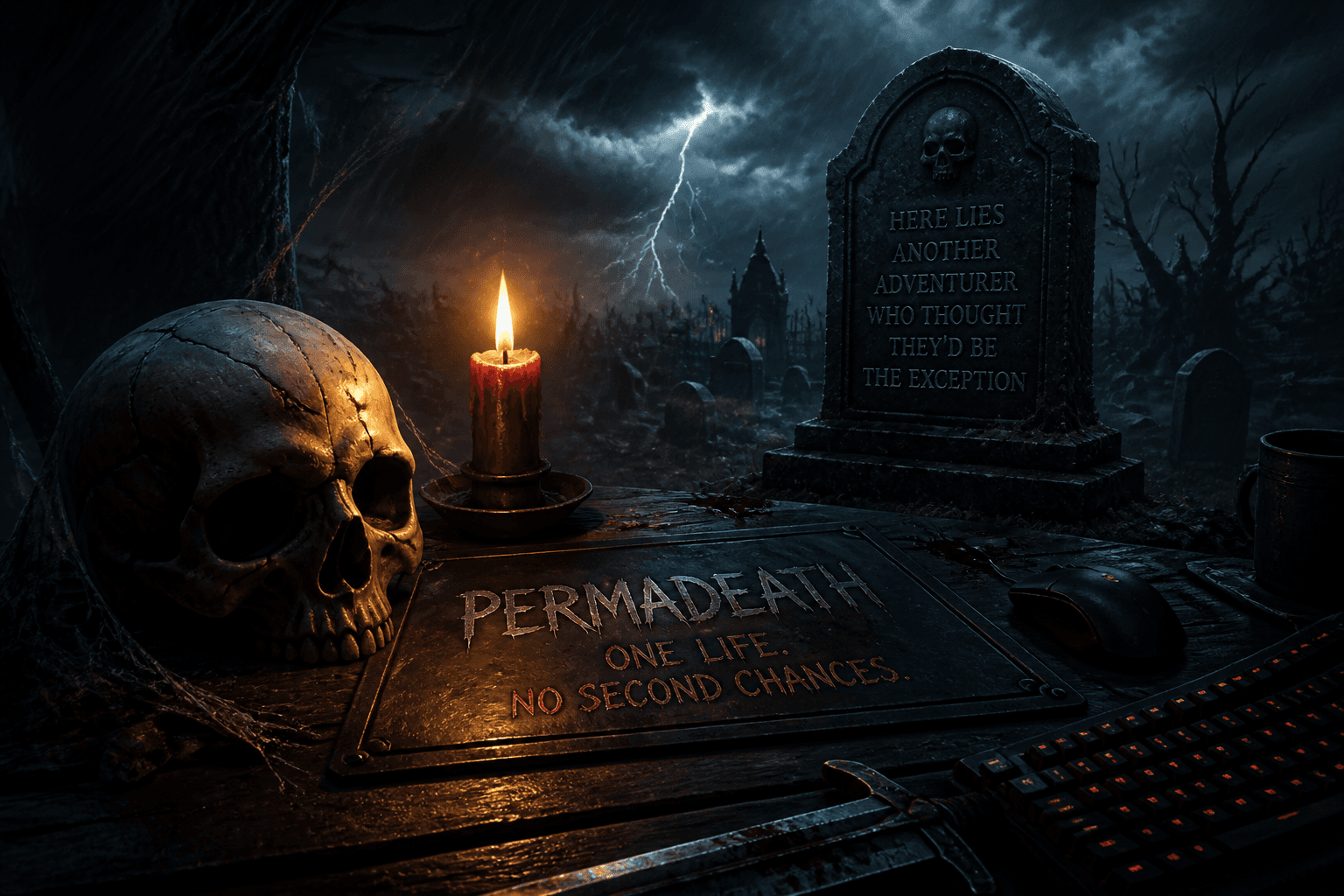
The rules are simple: one life. Die to a mob, a disconnect, a PvP swing, or fall damage, and that character is done. No corpse run. No "try again on the same hero."
What makes Hardcore WoW compelling is not that vanilla combat is mechanically modern-hard. It is the stakes. Every pull matters. Every dungeon invite is a risk assessment. The elite you yank carelessly on a normal Classic realm becomes a planned engagement with an escape path on Hardcore.
The community that formed around Hardcore is distinct: helping someone survive has weight. Streamers — including large creators in the Asmongold orbit and dedicated Hardcore specialists — turned death clips and miraculous saves into a content engine that fed more players into the mode.
By 2026, Hardcore is not a one-off event Blizzard stumbled into; it is a recurring expectation in the Classic product conversation. Fresh Hardcore waves still spike viewership whenever a new progression season or self-found variant captures the timeline.
OSRS: The Original Hardcore MMO
Old School RuneScape pioneered mainstream MMO hardcore with Hardcore Ironman, stacking permadeath risk onto Ironman's no-trade, no-GE self-sufficiency rules.
One death removes hardcore status and demotes the character to regular Ironman. The OSRS community built legends around HCIM players who push deep into endgame, with multi-episode YouTube sagas tracking every close call.
The appeal mirrors WoW Hardcore but collides with OSRS's already punishing PvM. Inferno, Corrupted Gauntlet, and Theatre of Blood are stressful with normal deaths; on hardcore status they become nerve tests. OSRS Hardcore Ironman hiscores remain a prestige board, and a high HCIM rank is still one of the game's most respected flexes.
Deadman Mode and other high-stakes seasonal PvP formats extend the same adrenaline philosophy into temporary worlds — different rules, same appetite for consequence.
Why Permadeath Appeals to Modern Players
It seems counterintuitive. Games spent decades making death cheap. Why opt into the harshest penalty?
1. Meaning through consequence
In a standard MMO, death is a repair bill and a jog. Convenience flattens emotion. Hardcore restores a wider emotional range: euphoria after a close call, genuine pride after a dungeon clear, grief after a stupid misclick. Success feels earned because failure would have hurt.
2. The content creator economy
Hardcore creates authentic drama. Death compilations, 200-hour heartbreaks, and clutch escapes drive Twitch and YouTube engagement in a way scripted bits cannot. The feedback loop is blunt: creators play hardcore → viewers get hooked → more players try it → more clips appear.
3. Community building
Shared risk builds denser social graphs. Hardcore guilds coordinate information, escort vulnerable characters, and celebrate level milestones like real achievements. Helping someone is not a throwaway emote when their character can permanently vanish.
4. Nostalgia for old-school design
Modern design optimizes retention. Older games were meaner. Hardcore lets players rent that philosophy inside modern clients without abandoning the worlds they already love.
5. Identity and résumé
A living level-60 Hardcore character or a deep HCIM account is a status object. Even players who never stream understand the flex. That identity layer is why hardcore adjacent cosmetics, titles, and hiscores matter culturally.
The Business Case
Developers noticed:
- Blizzard productized WoW Classic Hardcore instead of leaving it to honor-system communities
- Jagex keeps expanding hardcore-adjacent and high-stakes formats around OSRS
- Grinding Gear Games treats hardcore leagues as a first-class Path of Exile / PoE2 expectation
- Diablo 4 ships hardcore as a permanent realm choice, not a seasonal gimmick

The Dark Side
Hardcore is not free of harm:
Disconnects and instability ruin runs that skill could not have saved. A 200-hour death to a DC is the mode's original sin, and no design fully deletes infrastructure risk.
Grief culture appears wherever open-world PvP can delete hardcore characters. Some players hunt fame by ending long-lived heroes; communities respond with blacklists, clips, and sometimes real-world vitriol.
Burnout is real. Constant vigilance is exhilarating and exhausting. Many players rotate between hardcore and softcore to stay sane.
Market weirdness shows up too. Softcore accounts are easy to evaluate; hardcore characters are fragile inventory. Buyers who purchase a hardcore-progressed character are buying a story that can end on the next login if they are not careful — which is why hardcore transfers demand extra honesty about rulesets and risks.
What's Next for Hardcore Gaming?
The 2026 trajectory still points up:
- More MMOs shipping official hardcore realms instead of forum honor systems
- Seasonal hardcore events that marry time-limited rewards to permadeath stakes
- Tournament formats with prize pools (Deadman-style competitions remain the template)
- Creator challenges that chain permadeath runs across multiple games for marathon content
The Bottom Line
Hardcore gaming is a return to risk, reward, and emotion in a landscape that often sands those edges off. Millions of players keep answering "are you sure?" with yes.
If hardcore interests you but you want to skip early softcore grinding elsewhere in your library, AccountShark offers accounts across WoW Classic and OSRS — with the obvious caveat that once you flip into a true hardcore ruleset, what happens next is on you. No take-backs.
Browse WoW accounts on AccountShark — verified listings with characters, mounts, transmog, and progression. For OSRS specialists, start at the OSRS marketplace.
Hardcore vs "Difficult" — They Are Not the Same
A Mythic raid boss can be mechanically brutal and still cost you only a wipe timer. Hardcore difficulty is orthogonal: the systems may be simple, but the failure state is existential. That distinction explains why vanilla questing can feel more intense on Hardcore than a modern Mythic+ key on a softcore main. Designers who confuse "add more one-shots" with "add hardcore" miss the point — players are buying consequence, not necessarily complexity.
How Account Culture Collides With Permadeath
Account marketplaces mostly price durable progress: mounts, transmog, quest flags, raid achievements, skill totals. Hardcore progress is anti-durable. That tension creates three buyer archetypes:
- Softcore collectors who want the prestige cosmetics and stories without logging the hardcore character
- Risk players who intentionally buy a living hardcore hero to continue the run
- Documentary buyers who treat a dead hardcore legend's softcore remains as memorabilia
Frequently Asked Questions
What is hardcore mode in an MMO?
A ruleset where death has permanent or near-permanent consequences for that character — full deletion, irreversible status loss (as with OSRS HCIM), or season-ending failure — instead of a trivial repair cost.
Is WoW Classic Hardcore still popular in 2026?
Yes. Official Hardcore realms and recurring community waves continue to draw players and stream audiences whenever a fresh progression moment appears. Popularity spikes are cyclical, but the mode is no longer a novelty experiment.
What is an OSRS Hardcore Ironman?
An Ironman (no trading / GE) that loses hardcore status forever on death and becomes a regular Ironman. High hiscores ranks are among OSRS's most respected accomplishments.
Why do streamers love permadeath?
Because failure is expensive and visible. Viewers feel real stakes, clips travel well, and long survival sagas create serialized storytelling without a script.
Should I buy a hardcore-progressed account?
Only if you understand the ruleset and the risk. A hardcore character can be worth a lot as a trophy and worth nothing after one mistake. Prefer transparent sellers and know whether the listing is softcore, hardcore, or HCIM before you pay.
Is hardcore the future of all MMO design?
No — it is a parallel product. Most players still want soft failure. The winning publisher move is offering both, not replacing convenience realms with permadeath-only worlds.