Quick Answer
Crusader Kings III: Silk & Silver releases on Tuesday, November 17, 2026. The Steam countdown points to 11:00 AM CT (9:00 AM PT, 12:00 PM ET, 17:00 UTC). The Major Expansion costs $29.99 / £25.99 / €29.99 on its own and is included in the $43.99 Chapter V expansion pass. It adds two playable governments, landless Merchant families and patrician Republics, a map-wide trade system with 44 goods and 922 markets, Trade Leagues, monopolies and two new bookmarks: 1066 Channels of Commerce and 1178 Guelphs & Ghibellines.
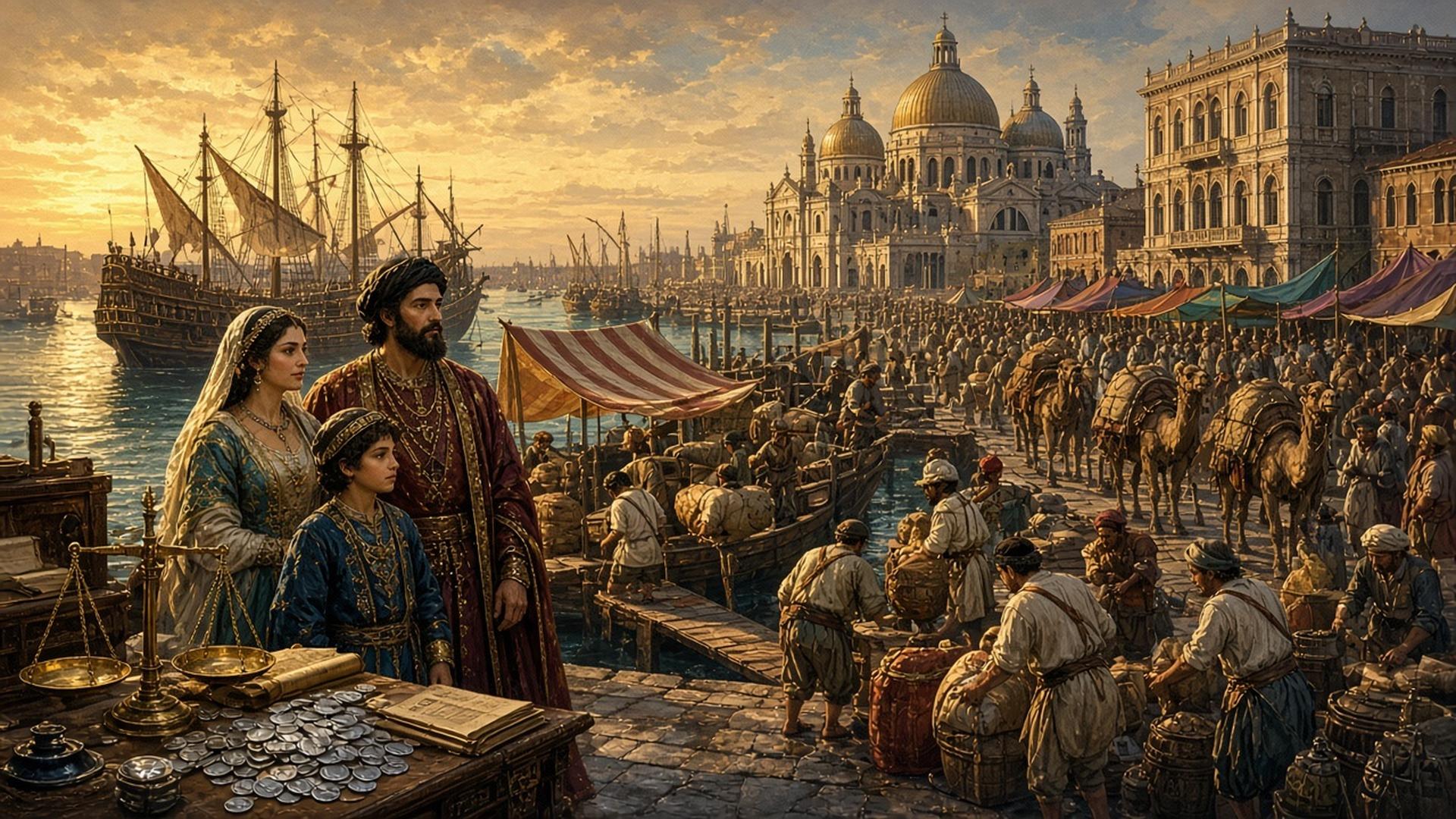
Crusader Kings III has spent six years as a game about blood, land and the people who sit on thrones. Silk & Silver is the first expansion that lets you ignore the throne entirely. Paradox Development Studio's new Major Expansion turns trade into a full simulation layer across the map, then hands you two new ways to play inside it: a landless merchant family running a trading company, or a patrician house fighting for control of a republic such as Venice or Genoa.
It is also the second half of Chapter V. By God Alone, the religion-focused Core Expansion, arrived on September 30, so Silk & Silver closes out the pass that Paradox launched earlier this year. Below is everything you need for launch day: the exact unlock time, what you pay, how the new trade economy works, what changes for Merchants and Republics, and which bookmarks and achievements to aim for first.
Silk & Silver Release Date and Unlock Time
Paradox announced the expansion on October 19 with a November 17 release. The Steam store page carries a precise unlock timestamp of 17:00 UTC, which converts as follows:
The expansion is listed for Windows, macOS and SteamOS/Linux, the same platforms as the base PC game. It requires Crusader Kings III and is single-player, with Steam Achievements and Family Sharing support. A free game update traditionally lands alongside every CK3 expansion, and Paradox's dev diaries confirm one is coming with Silk & Silver, including a batch of modding improvements and the new Settlement Size feature for all players. The full patch notes, which will spell out exactly where the free update ends and the paid content begins, had not been published as of November 15.
Price: Silk & Silver vs Chapter V
The standalone price is $29.99 / £25.99 / €29.99, the usual tier for a CK3 Major Expansion.
The better value depends on what you already own. Chapter V sells for $43.99 / £36.99 / €43.99 and includes four items:
- Silk & Silver, the Major Expansion (November 17)
- By God Alone, the Core Expansion focused on religion, released September 30 and listed at $19.99 on its own
- Songs of the Realm, a 13-track music pack mixing remastered Crusader Kings themes with adaptations of traditional European music
- Symbols of Authority, a cosmetic pack of new crowns and headwear for European characters, unlocked immediately on purchase
How the New Trade System Works
Trade is the foundation of the expansion, and it reaches every corner of the map, not just Italy. Paradox's eighth dev diary, "Trade in Practice," laid out the machinery in unusual detail. Values in that diary were still being balanced, so expect some numbers to shift at release, but the structure is settled.
Markets and goods
Every de jure duchy on the map becomes a Market, for 922 Markets in total. Markets are fixed for the whole campaign: if a county drifts into a different de jure duchy, its baronies stay in the Market they started in. Old saves are supported, with Markets generated when you load them.
The Market Owner is whoever holds the county containing the Market's capital barony. That character sets tolls, grants monopolies and can commission merchants, which means a plain feudal count suddenly has commercial levers to pull.
There are 44 Trade Goods, each with a base price and one of 20 Need Categories such as Cereals, Meats, Alcohol, Comforts, Fabric, Clothes, Base Metals, Precious Metals, Books and Medicaments. Sixteen goods count as Basic Goods: the three cereals, both meats, beer and wine, horses and cattle, wood and hemp, stone, iron and copper, and gold and silver.
Nine goods cannot be produced from the land at all. Cheese, cured meat, beer, textiles, leather, glass, jewelry, lacquerware and books only come from buildings that convert other goods. Feeding a Weavers' Guild 30 Fabric, for example, yields 10 Textiles. Supply chains are therefore real: a city that wants books needs the inputs to arrive first.
Prices and Prosperity
There is no fluctuating supply-and-demand pricing. Paradox tested scarcity-driven prices early and dropped them, so scarcity now decides how much you can trade, not what it costs. Price is driven by Market Prosperity instead:
- Selling pays 0.5% more for every point of average Prosperity, up to +50% in a Market at 100.
- Buying stays at base price while Prosperity is 50 or higher, then gets cheaper by 0.3% per point below 50, down to -15% at 0.
Tolls
Market Owners choose from six toll levels, starting at the middle setting of 3% on sales. Tolls apply only to sales on Profit Routes, never to buying, and toll income counts as commerce tax, so buildings and modifiers that raise commerce tax raise toll income too. Changing tolls has a 36-month cooldown tied to the person who made the change, so an heir or conqueror can reset them on day one.
Because tolls are baked into the sell price, merchants naturally route around expensive Markets. AI owners revisit tolls every five years. Greedy, indebted or warlike rulers tend to push toward Very High, while generous ones drop to Low. Merchants can negotiate a ten-year Toll Exception for themselves, which disappears if the Market changes hands.
Three kinds of routes
How you move goods depends on your government:
- Profit Routes belong to Merchants and Republics. Each one visits up to three Markets, carries up to six goods, and must stop in one of your home Markets. They earn gold, pay tolls and compete with other traders for a slice of each Market's surplus.
- Distribution Routes belong to feudal, clan, tribal and administrative rulers of duke rank and above: one for a duke, two for a king, three for an emperor and four for a hegemon. They link two Markets you or your vassals own, carry Basic Goods automatically, have no capacity or length limit, and are served before any merchant. They earn nothing and exist purely to keep your buildings supplied.
- Commission Routes connect the two worlds. A landed patron hires a Merchant client to deliver a chosen good to one of their Markets for ten years. The merchant gets an upfront lump sum but acts only as a carrier, with no trader assignment, expertise or monthly income from that route.
Competitiveness and monopolies
When several traders work the same Market, Competitiveness decides how big a share of each good every route receives. It combines a character's own modifiers with situational bonuses from the Market, the route and assets like Trade Posts.
Monopolies sit on top of that. A Normal Monopoly locks out competitors in a Need Category without changing prices. An Exploitative Monopoly goes further: its holder can buy from the Market's total production rather than its surplus, taking goods before local buildings are fed. A Market can hold one Complete Monopoly covering everything, or one monopoly per category. Monopolies never expire, are inherited and survive the Market changing owners. They end only when the owner rescinds them at a prestige cost, when a Trade League holding one collapses, or through war.
Playing as a Merchant Family
The Merchant is a landless government. You have no counties and no feudal vassals; you run a family company from a Domicile, which the store page calls your mansion, and spend gold and prestige to upgrade its grounds for more routes and stronger bonuses.
Company Purposes and specializations
Paradox's marketing describes three specializations, and the dev diaries settle on four Company Purposes in the current build:
- Caravaneer moves large volumes of goods along routes.
- Creditor lends money to rulers and absorbed the effects of the earlier War Profiteer concept.
- Artisan creates new artifacts.
- Reputable focuses on standing and reputation rather than a single trade.
Traders, expertise and rivals
Every route can have one assigned Trader, and that character's skills and Merchant trait shape how well it performs. You choose whether each Trader focuses on Competitiveness, Trade Expertise for the route's main good, or extra capacity. While working a route, Traders run small schemes in Markets along the way, such as securing a surplus in Lombardia for a multi-year capacity boost. Poaching skilled Traders from rival companies is, naturally, an option.
Trade Expertise is gained per Need Category across 20 levels, and it can be shared with friends through an interaction or stolen with a hostile scheme. Rival merchants are handled through Trade Opportunities such as Challenge Competitor, Sabotage Competitor and Disrupt Charter, plus aggressive moves like Undercut the Competition and Put on Notice. When beating a rival on price stops being enough, Merge Company absorbs them peacefully, while Attempt Hostile Takeover is a hidden scheme that requires a company at least as large as theirs and a hook on them, their patron or someone in their household.
Loans and usury
Any Merchant can lend gold, and Creditors build an identity around it. A loan, scaled to the borrower's income, gives you a Strong Hook for as long as the debt stands. There are three terms:
- Open Interest: the borrower owes 25% more, but if their faith condemns usury they may get the debt struck down.
- Disguised Interest: 15% more, folded into fees and gifts so clergy have nothing to point at.
- Interest-free: they owe exactly what they borrowed, like you more, and a charitable faith can make you Pious.
Patrons, cultures and the Silk Road
Merchants still need protection, so lobbying a landed Patron for charters and support is central to the loop. New interactions let you pay a prisoner's ransom to put them in your debt or reinvest funds in a ruler's realm to strengthen your position. Cultural Traditions shape the experience by region: Fortune Seekers and Saharan Traders unlock the Become Merchant decision, while Binding Oaths makes breaking contracts more damaging. Merchants inside the Silk Road region join a dedicated participant group with route bonuses tied to its phases. Every Silk & Silver owner gets that feature, though its link to the Dynastic Cycle only matters if you also own All Under Heaven.
Playing as a Republic
Republics are built to grow tall rather than wide. Instead of conquering land to create titles, you develop your capital and raise the Republic's tier through a dedicated law as the city grows, unlocking higher Domain and Vassal Limits and more trade capacity. County-tier Republics are limited to the basic Communal Administration and a single patrician family; the system really opens up at Duchy tier.
Patricians, the Assembly and Ambitions
You play a patrician house competing with rivals for the top seat, typically the doge. Laws are voted through an Assembly, and members vote according to their personality, their house's ambition, the goods they trade and their opinion of whoever raised the vote. Laws cover who sits in the Assembly, what it controls and how big a majority is needed. Trade laws such as Subsidized Trade Goods boost expertise in chosen goods.
Push laws toward despotism and your title changes to match, from Doge to Prince, for instance. Your house's Patrician Rating sets the strength of your Ambition, and you can pick from five at any time: Commerce, Aggrandizement, Communal, Signorial and Agitation. Council positions, Assembly seats and trade income all raise the rating.
Merchants and Patricians share the same Domicile type. You can join a Republic as a Merchant or leave one to go back on the road without losing your upgrades.
Popular Opinion and Capital Uprising
The capital's Popular Opinion is the stat to watch. If it falls, a Capital Uprising faction forms, and its discontent grows faster the lower Opinion drops. Rather than declaring war immediately, it triggers events that grow more severe as Opinion falls. Despotic laws reduce Opinion, while buildings, decisions and Assembly-approved decrees funded by the state treasury raise it. The repeatable Civic Works Great Project lets you pour excess gold into the capital for Opinion, Prosperity growth and decade-long bonuses, and civic carnivals add celebratory events.
Trade Posts
Republics extend their reach through Trade Posts in foreign counties within diplomatic range. Each county can host only one, and they can be built, transferred through persuasion or bribes, or stolen with a scheme. Trade Posts act as starting points for routes and host buildings that can shift local prices or even unlock local cultural men-at-arms. Owning one also enables the Conquer Trade County casus belli against neighboring or coastal counties, modeled on Venetian island holdings and Genoese footholds in Crimea. You can exceed your Trade Post limit, but with penalties.
Trade Leagues
Republics can band together in Trade Leagues with commercial and military benefits. League Cohesion runs from Casual Barter (0-20, no effects) through Shared Markets, Joint Ventures and Commercial Consortium to Mercantile Union at 95-100. Members can share market Competitiveness and goods expertise without needing friendly house relations, the league leader can set a focus category that boosts prices, production and expertise for everyone, and two new Trade Post buildings, one military and one economic, become available.
Leagues get three new casus belli: Trade War against a rival league for its trade posts and monopolies, Proclaim Commune to carve an independent republic out of a non-republic ruler's land, and Enforce a Monopoly, which a league can use at 70 Cohesion. Founding the Hanseatic League is a decision with its own achievement, and map changes add more room for republics in the northern Holy Roman Empire.
The New Bookmarks
1066: Channels of Commerce
This start focuses on famous merchants of the era building networks for spices, silk and silver. The new achievements point to some of the headline characters: one asks you to start as Wuhsha "the Broker" and hold at least ten debtors at once, and another asks a member of the Dandolo dynasty of Venice to join a victorious Crusade against Byzantium. The Guelphs and Ghibellines situation also exists in 1066 in a slower Prelude form, with historical beats such as the Investiture Controversy and the Concordat of Worms if you play through them.
1178: Guelphs & Ghibellines
The second bookmark drops you into Northern Italy after the Battle of Legnano and the Treaty of Venice, with the Lombard League already formed. The Guelphs back the papacy and the independence of the Italian city-states, while the Ghibellines back the Holy Roman Emperor. The situation moves through phases such as Repose and Agitation, and a side needs at least 70% power to reach its Advantage phase and push for victory. Situation actions include Replace Ruler, Claim Leadership, Align Undecided and the Displace Ruler casus belli. New Italian traditions, Contado, Civic Religion and Roman Law, flavor the region's cities.
Art, Music and Modding
Composer Magnus Ringblum returns with a new main theme and eight mood tracks centered on Italian flavors, with instruments such as the hurdy-gurdy, the Indian bansuri and the Chinese pipa reflecting trade ties east. Settlement Size adds ten levels of visual and audio growth to holdings and comes to the base game as well. Almost the entire trade system is data-driven, so modders can add goods, categories, toll levels and trade tasks from their own files, and the accompanying free update brings a separate set of modding improvements requested by the community.
Achievements Worth Planning For
Paradox revealed a long list of new achievements ranging from easy to brutal. Some to target early:
- Raise a Merchant company to Trade Empire size.
- Take the Found the Hanseatic League decision.
- Own seven Trade Monopolies at the same time.
- Expand Venice to its historical borders.
- Take the Restore the Roman Republic decision.
- Hold full despotic power as head of a Republic.
- Run Trade Routes through both Kinai and Cairo at once.
- Finish the Caravaneer, Artisan and Creditor tracks of the Merchant trait with one character.
- In one lifetime, play as a Merchant, an Adventurer, in a Republic and as a Feudal, Clan or Ecclesiastical ruler.
Who Should Buy Silk & Silver
Crusader Kings III has never had a real trade layer before, so Silk & Silver changes the economy more than any previous expansion. If you enjoyed the landless Adventurer play from Roads to Power, or simply want a reason to care about money beyond taxes and levies, it is the expansion built for you. Traditional feudal players are affected too: Markets, tolls, Distribution Routes and merchant commissions all touch landed play. Players who prefer short war-focused campaigns may want to wait for reviews and the first post-release patches, since a system this large usually needs balance passes in its first weeks.
Frequently Asked Questions
What time does Crusader Kings III: Silk & Silver release?
Steam lists the unlock at 17:00 UTC on Tuesday, November 17, 2026. That is 9:00 AM PT, 11:00 AM CT, 12:00 PM ET, 5:00 PM in the UK and 6:00 PM in Central Europe.
How much does Silk & Silver cost?
The suggested price is $29.99, £25.99 or €29.99. It is also part of the Chapter V expansion pass, which costs $43.99 and includes By God Alone, Songs of the Realm and Symbols of Authority.
Is Silk & Silver included in Chapter V?
Yes. Chapter V owners get Silk & Silver automatically at launch, alongside By God Alone, which released on September 30, and the two smaller packs.
Can you play as Venice in Crusader Kings III Silk & Silver?
Yes. Republics such as Venice and Genoa become playable, and you lead a patrician family competing to hold the top office. One achievement asks you to expand Venice to its historical borders.
What is the Merchant government in CK3?
It is a landless government where your family runs a trading company from a Domicile. You earn gold from Trade Routes, build expertise, lend money, compete with rival companies and seek patrons, without holding counties.
Do I need Silk & Silver to use the new trade system?
Paradox has confirmed that Settlement Size and a set of modding improvements come to everyone in the free update, and that the Silk Road merchant feature is for Silk & Silver owners. The release patch notes will define the full free and paid split, including how much of the Market and route system non-owners see.
Does Silk & Silver work with old saves?
Paradox says Markets are created when you load a save from before Silk & Silver. Large expansions can still change balance substantially, so starting a new campaign is the safer option for the new governments and bookmarks.
Is Silk & Silver coming to PS5 or Xbox?
No console release has been announced. The expansion is listed on Steam for Windows, macOS and Linux.