Path of Exile is getting its biggest endgame shake-up in years, and it arrives four weeks before its sequel goes free-to-play. Grinding Gear Games revealed Covens of Umbra, the 3.30 expansion for the original game, on the ExileCon 2026 main stage in Auckland on November 6 (US time). It launches for free on Friday, November 13 at 11:00 AM PST, which is 1:00 PM Central, on PC and consoles, according to GGG's official launch post.
The headline is not only the new league. Scarabs are gone, replaced by a system called Threads of Creation. The Atlas passive tree has been rebuilt from scratch. Mirage goes core, Atziri moves into the Temple of Atzoatl, and ground loot gets visible tiers for the first time. On top of all that sits a witch-themed challenge league where you decide how hard each boss fight should be, then wear pieces of the bosses you kill.
This guide covers the launch time, the league mechanics, the Scarab replacement, the Atlas changes, the loot rework and what it all means for the first week. GGG's full feature rundown is on the Covens of Umbra announcement page and in its Steam announcement.
Covens of Umbra Release Date and Launch Time
Covens of Umbra goes live on Friday, November 13, 2026 at 11:00 AM PST. Daylight saving time has already ended in the US, so that converts cleanly:
- Pacific: 11:00 AM
- Mountain: 12:00 PM
- Central: 1:00 PM
- Eastern: 2:00 PM
- UTC: 7:00 PM
- UK: 7:00 PM
- Central Europe: 8:00 PM
- New Zealand: 8:00 AM on Saturday, November 14
Before that, the current challenge league has to wrap up. GGG's 3.30 timeline post set the end of Curse of the Allflame for Monday, November 9 at 1:00 PM PST (3:00 PM CT). Characters and items from that league move to Standard when it closes, so any remaining challenges need to be done before Monday afternoon.
Patch notes for 3.30 had not been published as of November 8. GGG normally posts the full notes a few days before launch, and they will be the place to check exact numbers for anything covered below.
The Covens of Umbra League Explained
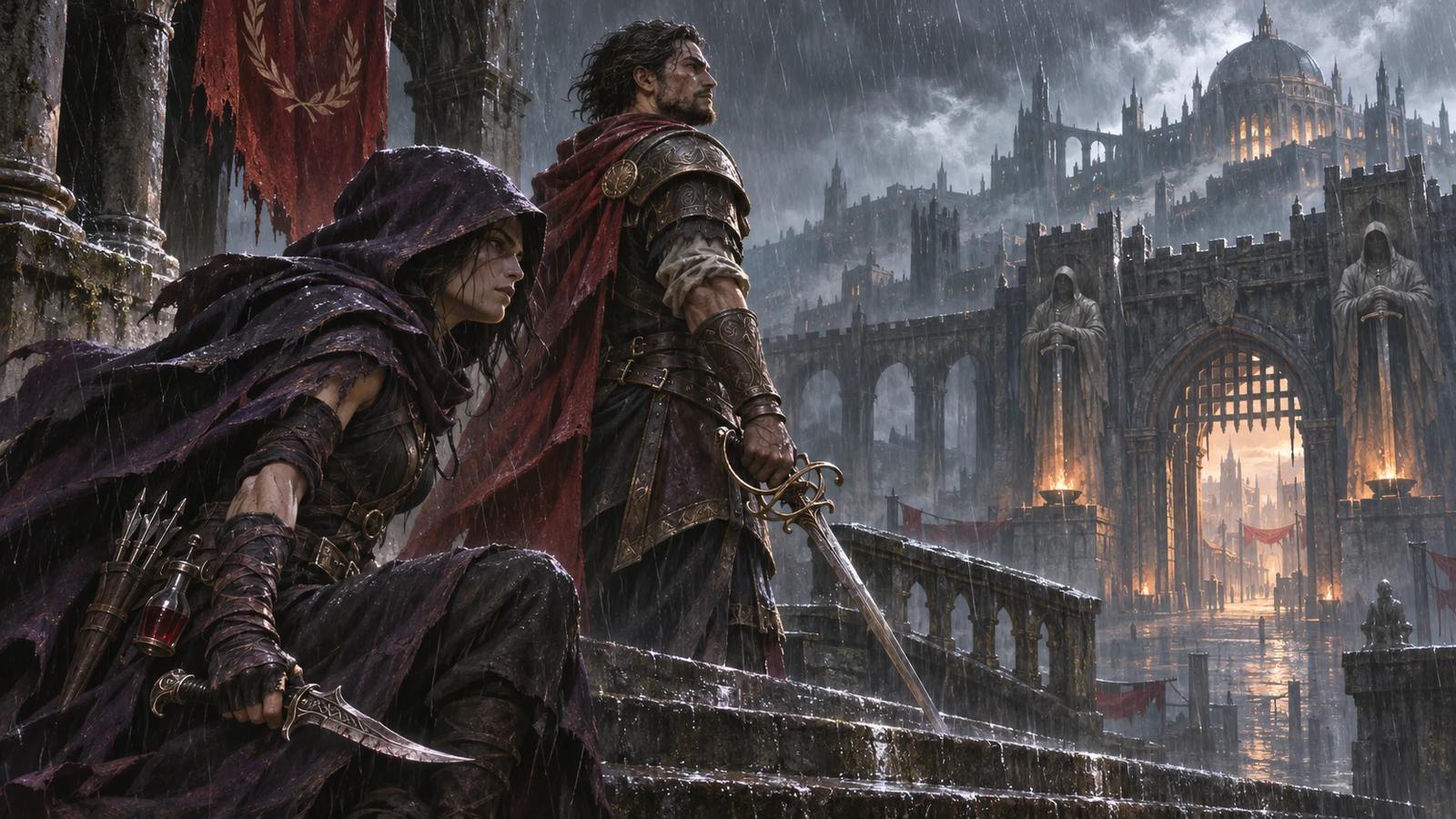
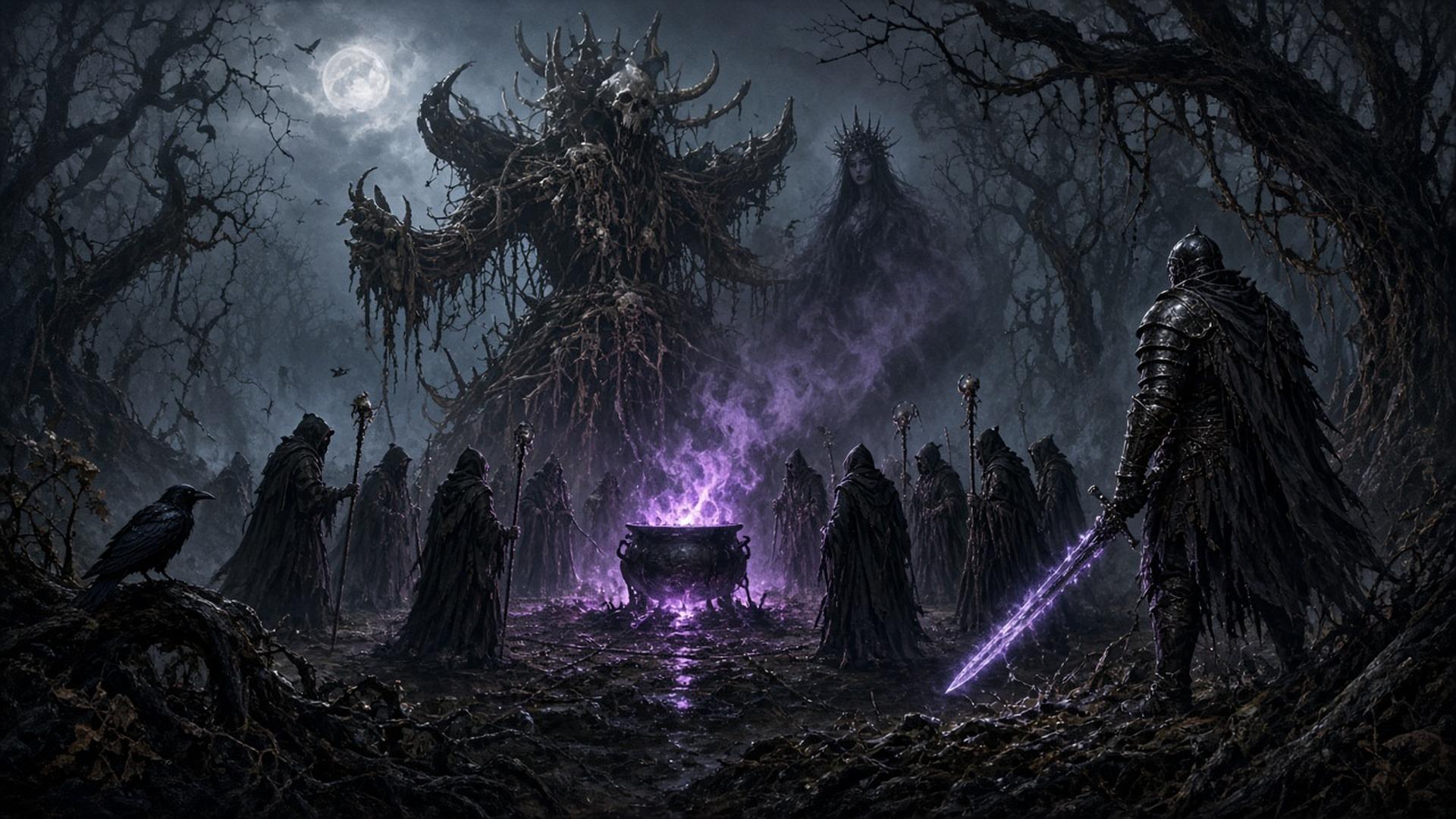
The story setup is simple. The Coven Queen condemned her homeland of Umbra to eternal darkness and now wants Wraeclast. Her followers, the Covens of Umbra, have spread across the continent and are performing grisly rituals around cauldrons. A prisoner of the Queen named Mora helps you disrupt them, starting in the opening areas of the campaign.
The league has two halves that feed each other: Fates, which make bosses harder, and the Wickerman, which turns those harder bosses into character power.
Fates: Choosing How Hard Each Boss Fight Is
When you defeat a coven ritual, you get to pick a Fate for the boss of the area you are in. Each Fate adds a handful of effects that raise both the difficulty and the rewards of that boss encounter. The official press release lists examples such as explosive blackfire, deadly vines and harpoons of bone and blood.
Key rules from the reveal:
- You can invoke up to three Fates on a single boss.
- As you progress, more coven encounters appear per area, so you can be holding four or five Fates and choosing which three to use.
- Surviving pays out currency, Unique items, Maps and other loot.
- Matching Fates unlock rarer rewards, including Exceptional Support Gems and brand new Unique items.
- Stacking duplicate Fates sharply boosts the reward of the first one. Inven Global's keynote coverage describes duplicates as tripling it, and item rarity bonuses and new unique flasks were among the rewards shown.
More Bosses in the Campaign
Fates only work on bosses, and plenty of campaign areas never had one. GGG fixed that by adding more than two dozen new campaign bosses to fill those gaps, so every campaign area and every endgame map now has a boss of its own. On-site coverage from PCGamesN adds that some campaign layouts were rearranged where needed so you run into those bosses without having to scour the whole zone.
For players who level several characters each league, that is a real change to the campaign rhythm. Expect slightly longer acts if you engage with every Fate, and plenty of optional power if you do.
The Wickerman and Viscera
The second half of the league is the Wickerman, a twisted wooden effigy you bind your character's soul to. Fate-empowered bosses can drop Viscera: grisly trophies such as limbs, flesh, bone, skin and carapace. Placing a Viscera on the Wickerman grants a scrap of that boss's power as a buff for your character.
The numbers GGG has shared:
- Over 120 Viscera to collect across campaign and Atlas bosses.
- Four slots: head, arm, body and leg, so up to four Viscera are active at once.
- Three tiers of increasing strength, with the highest tier only available from endgame versions of bosses.
- Bonuses range from extra life and regeneration to stronger poisons, so there is room for almost every build archetype.
Grim Fates and the Coven Queen
At the top end of the Atlas, Fate-empowered bosses in higher-level areas can drop Grim Fates. Unlike ordinary Fates, Grim Fates persist between instances and are stored on your Wickerman until you choose to use them. Each one is tied to a specific pinnacle boss.
GGG showed several examples of how Grim Fates rework familiar fights:
- Sirus: his storms become swarms of crows.
- Uber Elder: dark energy erupts from the portals, firing beams across the arena.
- The Shaper: conjures deadly illusions that mirror his own abilities.
For racers and bossers, this is the long-term chase of the league. Pinnacle Viscera should make high-end characters noticeably stronger, which in turn makes harder Grim Fates more practical. How strong those buffs are in raw numbers will only be clear once the patch notes and the first few days of play are out.
Threads of Creation Replace Scarabs
The single biggest change in 3.30 for experienced players is the removal of Scarabs. They are replaced by Threads of Creation, which are set directly in the Map Device.
Here is how Threads work, based on GGG's announcement and the keynote:
- Threads drop from the regular endgame loot pool, one type for each of the ten primary league mechanics: Abyss, Blight, Legion, Breach, Incursion, Betrayal, Bestiary, Expedition, Ultimatum and Ritual.
- At the Map Device you pick a mechanic and spend up to eight Threads on it.
- Each Thread spent makes that mechanic harder and more rewarding, scales monster rarity, and raises the chance of random powerful effects that augment it.
- Finishing the Atlas questline unlocks three Thread slots, so you can guarantee up to three mechanics per map.
- Your Thread setup persists between maps and pulls Threads directly from your stash, which removes most of the restocking busywork Scarabs required.
Where Scarab Power Went
Scarab effects are not simply deleted. Game Director Jonathan Rogers explained at the keynote that the intent is for the average player to get roughly the same amount of juice they had with Scarabs, but as a baseline from the Atlas tree, with Threads adding a layer of random jackpots on top. That shifts endgame strategy away from buying stacks of the right Scarabs and toward building an Atlas tree and choosing which mechanics to push.
For the in-game economy, the change is significant. Scarabs were one of the most traded item classes in every recent league, and a lot of mapping profit came from flipping or farming them. Threads are a fresh item category, so expect their prices to swing wildly in the first days while players work out which mechanics deliver the best returns at high Thread counts.
The Rebuilt Atlas Passive Tree
The Atlas passive tree has been completely refreshed with a new layout and dozens of new wheels, stats and effects. Many bonuses that used to live on expensive Scarabs are now available on the tree for everyone.
New notables named in the official press release include:
- True Terrors: extra modifiers on Unique Monsters.
- Fate Bespoken: Map Bosses can steal Divination Cards and may duplicate them on death.
- Golden orbs from Map Bosses: slain bosses can release orbs filled with Gold.
- Ghostflame Communion: Shrines can unleash Tormented Spirits.
- House Supremacy: more control over which Mercenary classes appear in your maps.
- By the Lanternlight: a chance for Veiled Items to drop as Allflames.
- Abyss passives: rare Corrupted Abyssal Jewels with extra or Veiled modifiers.
- Servants of the Well: five additional Rare Monsters can rise from Abyss depths.
Mechanics That Interact With Each Other
GGG also built crossovers between league mechanics so that maps feel less predictable. Examples from the keynote:
- A Tormented Spirit spawning next to an Expedition buries it under a haunted gravestone.
- Strongboxes near a Blight encounter can become infected, letting you open them multiple times with empowered rewards.
- Mercenaries close to an Abyss pit can be joined by the Chaplain of the Well, a stronger unit with its own rewards that can be recruited with a Warrant.
Mirage, Atziri and Other Endgame Changes
Almost every established endgame mechanic has been changed in some way. The highlights:
Two of these deserve extra attention.
Mirage going core is a big deal for mapping speed and loot. First introduced as a league mechanic in 3.28, a Mirage now covers the entire map it appears in, which effectively lets you run the map a second time through its mirrored counterpart. It can appear randomly or be rolled onto a map alongside modifiers such as Mirrors of Delirium or the Viridian Wildwood.
Atziri moving into the Temple reshapes Incursion. She evicts the Vaal Omnitect, brings her own adjustments, and the Temple gains the ability to corrupt items that are already corrupted. The new Cradle of Creation raises the Temple's difficulty and rewards further. Double corruption is a high-risk crafting tool, so expect it to become a major money sink and money maker for top-end gear.
Settlers of Kalguur also contributes experience and gold buffs, according to the keynote.
The Loot Rework: Tiered Magic and Rare Items
GGG calls this expansion's loot changes "fundamental changes to how loot drops in Path of Exile, unlike anything we've done before." Rogers put it more bluntly on stage, saying the core drop pool had become stale.
The main changes:
- Magic and Rare items can drop with visible tiers. Higher tiers roll higher-level modifiers, better base types and more sockets and links.
- At the top tiers, prized crafting bases such as Simplex Amulets and Cord Belts can drop from the core pool.
- Tier 5 Magic items can drop fractured, opening new crafting options directly from the ground.
- Item rarity has been overhauled. Monster item rarity now improves the chance of finding valuable currency, Divination Cards, Gems and Unique items, not just the number of Magic, Rare and Unique items.
If the rework lands as described, it changes what an item filter should show. For years most players hid nearly every Magic and Rare drop. In 3.30, a strict filter that hides high-tier bases could throw away valuable crafting material, so updating filters before launch day is worth the few minutes it takes. Filter makers such as NeverSink usually publish league-ready versions around launch.
What This Means for League Start
Covens of Umbra changes enough systems at once that the first week will be messier than usual. A few practical points:
- Finish Allflame before Monday. The current league closes on November 9 at 3 PM CT. Anything left uncompleted after that is gone.
- Plan for a longer campaign if you engage with Fates. More campaign bosses and optional Fates add time but also power, gems and currency on the way.
- Pick builds that kill bosses well. The whole league reward loop runs through empowered bosses, so strong single-target damage and defensive layers matter more than in a pure clear-speed league.
- Expect an Atlas learning curve. The tree, regions and Threads are all new. Early mapping strategies from previous leagues will not transfer directly.
- Watch the Thread economy. Prices for the most profitable Threads are likely to spike early and settle as supply builds.
- Update your item filter. Tiered Magic and Rare drops mean a strict old filter could hide good crafting bases.
Path of Exile 1 and Path of Exile 2 Side by Side
Covens of Umbra lands exactly four weeks before Path of Exile 2 reaches its 1.0 Full Release on December 11, when the sequel goes free-to-play with Acts 5 and 6, the Shadow and Duelist classes, and the Conquerors of Wraeclast league. Everything announced for the sequel at ExileCon is in the Path of Exile 2 1.0 guide.
GGG has repeatedly said both games will continue side by side, and the 3.30 reveal backs that up. This is not a maintenance patch for an older game. Removing Scarabs, rebuilding the Atlas tree and reworking ground loot are the kind of changes GGG usually saves for its largest expansions, and they suggest Path of Exile 1 will keep its own identity and audience well past the sequel's launch.
For players splitting time between both, the schedule works out neatly: a month of Covens of Umbra, then Path of Exile 2's launch league over the holidays.
Frequently Asked Questions
When does Path of Exile 3.30 Covens of Umbra launch?
Covens of Umbra launches on Friday, November 13, 2026 at 11:00 AM PST. That is 1:00 PM Central, 2:00 PM Eastern and 7:00 PM UTC. It is free on PC through the standalone client, Steam and Epic, and on PlayStation and Xbox.
When does the Curse of the Allflame league end?
The 3.29 Curse of the Allflame challenge league ends on Monday, November 9, 2026 at 1:00 PM PST, which is 3:00 PM Central. Characters and items move to Standard after it closes.
Is Covens of Umbra free?
Yes. Like every Path of Exile expansion, Covens of Umbra is free for all players. Optional purchases are cosmetics, stash tabs and Supporter Packs.
What is the Covens of Umbra league mechanic?
You defeat witch coven rituals to earn Fates, then invoke up to three Fates on an area boss to make the fight harder and the rewards better. Fate-empowered bosses can drop Viscera, body-part trophies you place on your Wickerman for permanent character buffs. There are more than 120 Viscera across four slots.
Are Scarabs removed in Path of Exile 3.30?
Yes. Scarabs are removed and replaced by Threads of Creation. Threads drop for ten primary league mechanics, go into the Map Device, and can be stacked up to eight per mechanic, with three mechanic slots unlocked through the Atlas questline. Many former Scarab effects move onto the rebuilt Atlas passive tree.
What are Grim Fates?
Grim Fates are rare Fates dropped by empowered bosses in higher-level Atlas areas. They persist between instances and are used against specific pinnacle bosses such as Sirus, the Shaper and Uber Elder, changing their attacks. Beating a Grim Fate pinnacle drops Pinnacle Boss Viscera, the strongest Wickerman buffs, and leads to the Coven Queen.
Is Mirage core in Path of Exile 3.30?
Yes. Mirage becomes part of the core game. It can appear randomly in maps or as a rollable map modifier, and a Mirage now covers the entire map, effectively letting you run it a second time.
What changed with loot in Covens of Umbra?
Magic and Rare items can now drop with visible tiers that improve modifiers, base types, sockets and links. Top tiers can drop bases like Simplex Amulets and Cord Belts, and Tier 5 Magic items can drop fractured. Item rarity now improves the value of currency, cards, gems and uniques that drop, not just the number of items.
Are the Path of Exile 3.30 patch notes out?
Not yet. GGG revealed the expansion at ExileCon on November 6, and the full patch notes usually arrive a few days before launch. Exact values for Viscera, Threads and Atlas passives will be confirmed there.
Does Covens of Umbra come out on consoles at the same time as PC?
Yes. GGG's launch post lists November 13 at 11:00 AM PST for PC and consoles, and the press release names PC, Steam, PlayStation, Xbox and Epic Games for the same date.